
The year 2014 is coming to an end. It was the year of conflict, the year of strife. Year 2014 will be remembered for several reasons -- the rise and threat of the Islamic State, the downing of two Malayasia Airlines aircraft and the sudden and effective way of using hastags on social media to generate a buzz about the event. After all, who can forget #theicebucket challenge and the phenomenon it grew into. Read on as we bring you an overview of international news and events of 2014.

'100 Fayazs will bring a change in Kashmir, that's why they don't want a Fayaz.'

Congress accuses Centre of 'protecting' state BJP chief's son.

'Is Ansari flagging a genuine concern? Is a rectification called for?' 'And finally: Do minorities matter?' asks Shekhar Gupta.
Articulate segments of Muzaffarpur have been at the the forefront of all anti-establishment mobilisation, which makes their silence over the atrocities in a shelter home in the town puzzling. Could it be that if those accused of horrific crimes belong to dominant castes and if the victims belong to the vulnerable groups, then the middle classes become mute, asks Mohammad Sajjad.

'The rise of IS and intolerant Wahabism are the real dangers to Indian democracy and pluralism, not the RSS,' says Rajya Sabha MP Tarun Vijay.
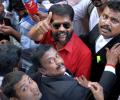
The 'Raj Bhavan/Nakkeeran Gopal case', in which editor S Gopal was arrested in the morning and set free by the court in the afternoon, is not the first one where the Tamil Nadu's once-reputed police force is seen as faltering in the eye of the law, says N Sathiya Moorthy.

Twenty-eight years ago almost to the day, 37 unarmed Muslims were killed in cold blood, an act of wanton violence for which no one has so far been held guilty. Jyoti Punwani and photographer Uttam Ghosh visited the Meerut locality after the trial court recently acquitted the security personnel charged with the killings, and found a town untouched by its grim past.

Despite being set in different yugas, there are characters who appear in both the Ramayana and the Mahabharata.

Former chief of R&AW C D Sahay dismisses comments linking the Gujarat riots and Babri Masjid demolition to the formation of the Indian Mujahideen

Highway isn't merely concerned with cataloguing the virginal, versatile landscapes of Northern India. Often it's the only ray of cheer to offset the grimness concealed within two wounded souls, feels Sukanya Verma.
.jpg)
I cannot agree with the sentiment that hanging rapists will make sexual harassment and assault, and other forms of violence against women, magically disappear. Misogyny has stained our culture for far too long for merely judicial recourse to be able to wash it away, says Paloma Sharma.

Rediff.com takes a look at some cases from the recent past where the courts awarded the capital punishment for horrific crimes that fall under the rarest of rare category.
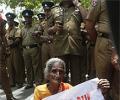
Prime Minister Manmohan Singh's decision not to attend the Commonwealth Heads of Government Meeting at Colombo has once again put the focus on alleged cases of human rights abuses in Sri Lanka.
.jpg)
It's perverse to rationalise 'controlled' killings or torture -- without going down a slippery moral slope. Once the state stoops to torture, it's liable to sink into tyranny, says Praful Bidwai.

West Bengal is poised to become the rape capital of India, but its chief minister refuses to face reality, says Debosmita Sarkar.

Rediff.com looks at other sensational murder mysteries that left India shell-shocked.

Protesting against enforced disappearances in Balochistan, Abdul Qadeer Baloch, 72, has led a small group that has covered more than 2,000 kilometres on foot, breaking the 84-year-old record set by Mahatma Gandhi during his Dandi march. Hamid Mir reports from Islamabad.
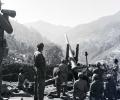
Fifty years ago, India and Pakistan fought a short but bloody war. The author finds out how Sainik Samachar, the defence ministry's journal, reported it.
